Zero-Click Search Strategy: Winning AI Answers in 2026
Your next customer may never visit your website. They'll ask Google, ChatGPT, or another AI assistant a question, read the answer, and form an opinion about your brand — all without a click. That's the zero-click reality, and it demands a different playbook.
This guide explains what a zero-click search strategy actually is, why it matters now, and how to build one that earns visibility, trust, and demand even when the click never comes.
What Is a Zero-Click Search Strategy?
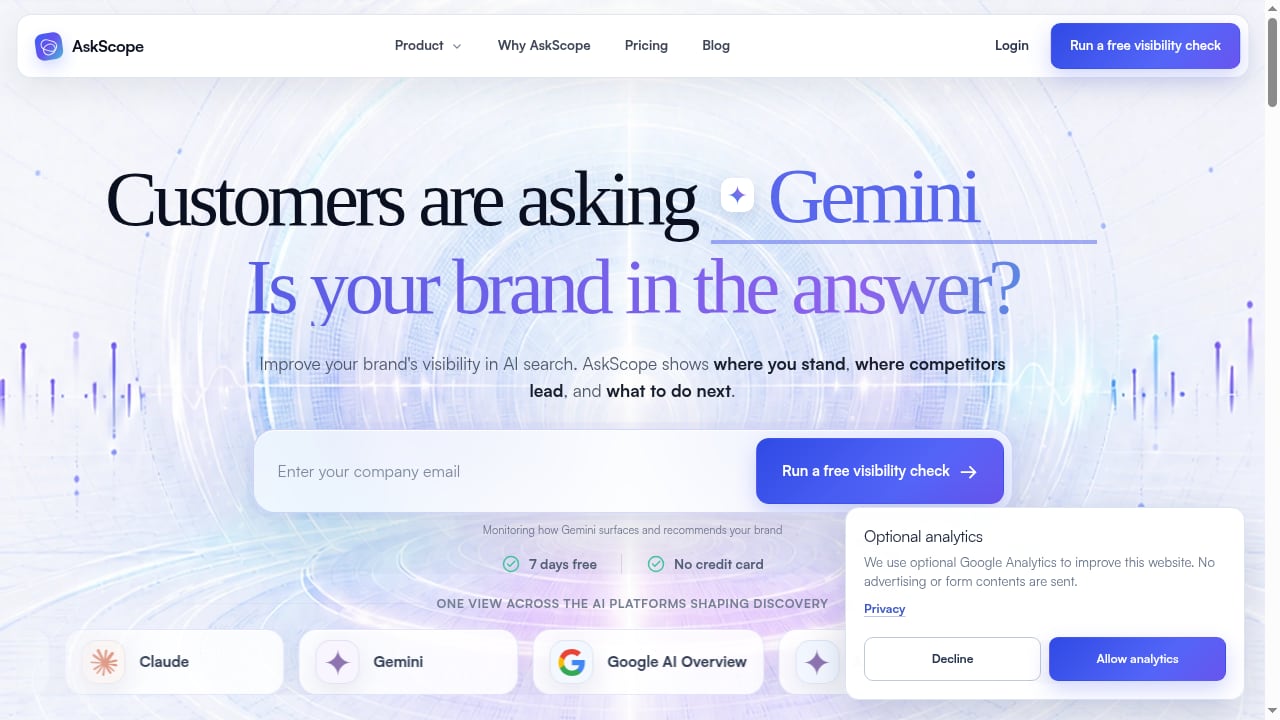
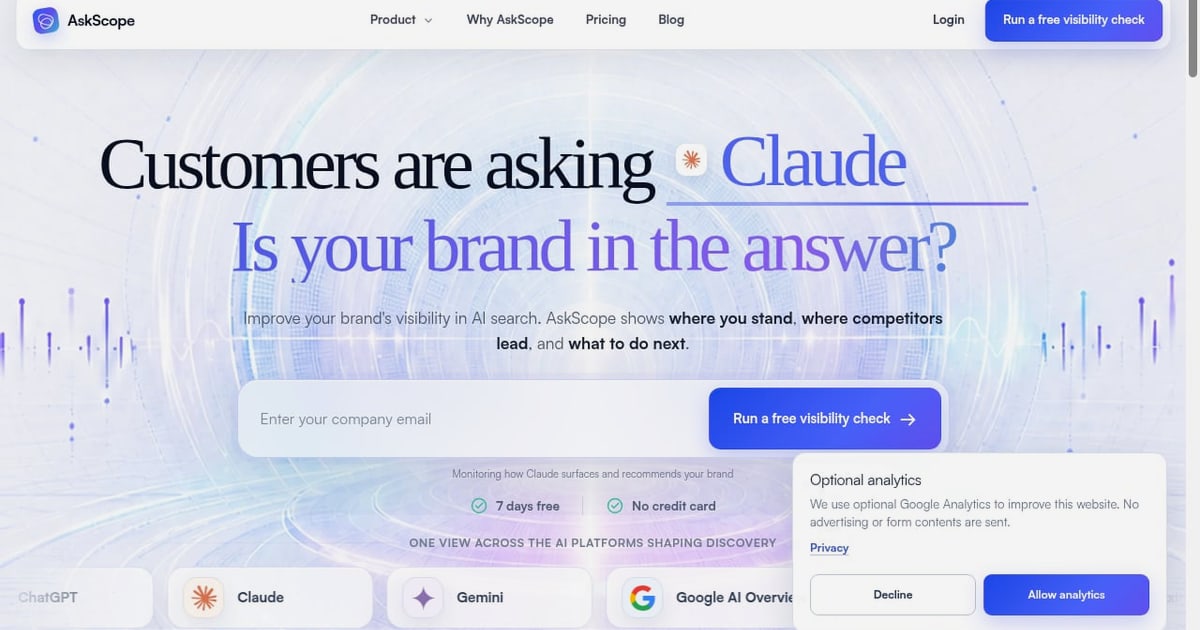
First viewport screenshot of Customers are asking AI. Is your brand in the answer?.
A zero-click search strategy is a plan to influence people before they ever reach your site. Instead of optimizing solely for clicks and sessions, you optimize for comprehension, trust, recall, and preference inside the surfaces where answers are consumed: AI Overviews, featured snippets, knowledge panels, People Also Ask boxes, voice assistants, and AI chatbots.
The goal isn't "no clicks." It's impact that doesn't depend on a click. The click becomes a downstream result of influence, not the signal that influence happened.
Why Zero-Click Behavior Is Accelerating
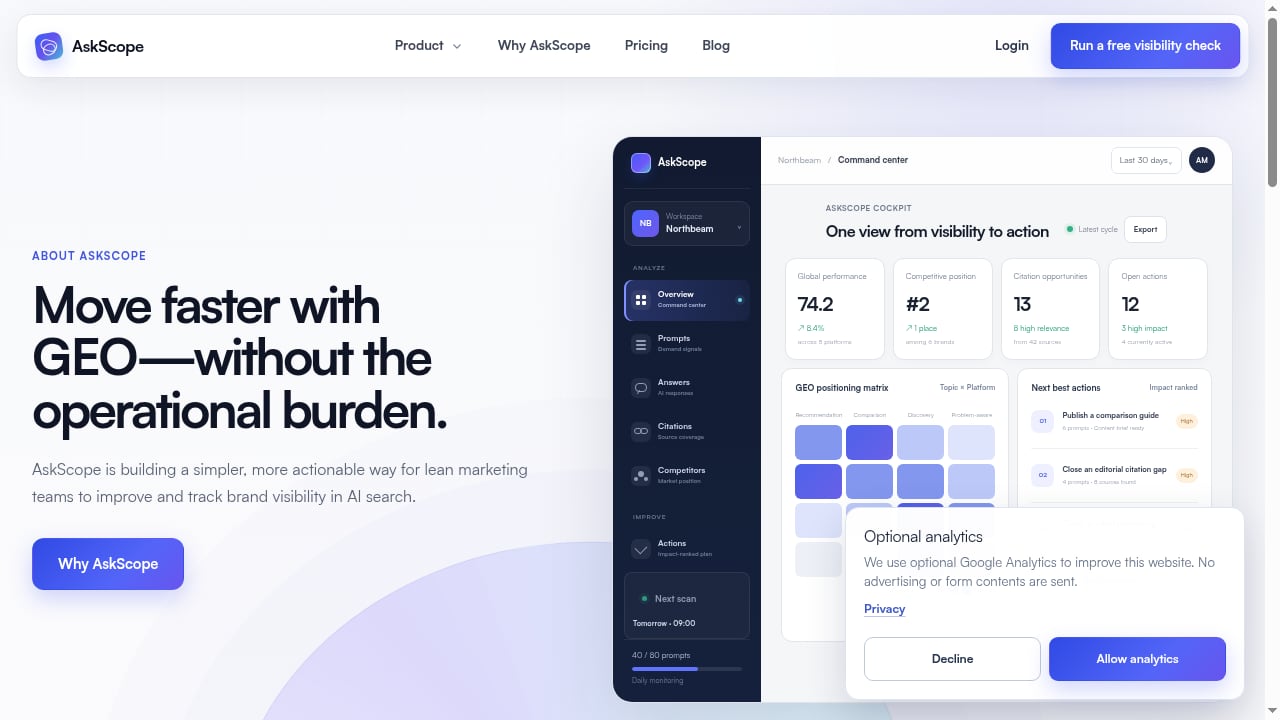
First viewport screenshot of Customers are asking AI. Is your brand in the answer?.
Three forces have converged to push zero-click rates past the point where click-through rate and organic sessions describe your brand's true search visibility:
- SERP feature maturation. Featured snippets, knowledge panels, and People Also Ask boxes have absorbed clicks for over a decade. Roughly 60% of Google searches without an AI Overview end without a click, according to SparkToro and Datos clickstream data.
- AI Overviews. These summaries now appear on a large share of queries and trigger an even higher zero-click rate — around 83% when present. Pew Research Center found that when an AI summary appeared, users clicked a traditional search result only 8% of the time, versus 15% without one.
- Mobile and voice behavior. Mobile users experience a 77% zero-click rate versus 56% on desktop, per SparkToro/Datos. Voice queries skew toward local intent, making local SEO signals a direct input into zero-click visibility.
The organizational problem is that most teams aren't measuring any of this. A Goodfirms survey of digital marketing practitioners found that only 14% of enterprise marketing teams track AI and LLM citation visibility, even as AI answers become a leading source of first-touch discovery.
The Measurement Gap: Why Your Dashboard Misses the Shift
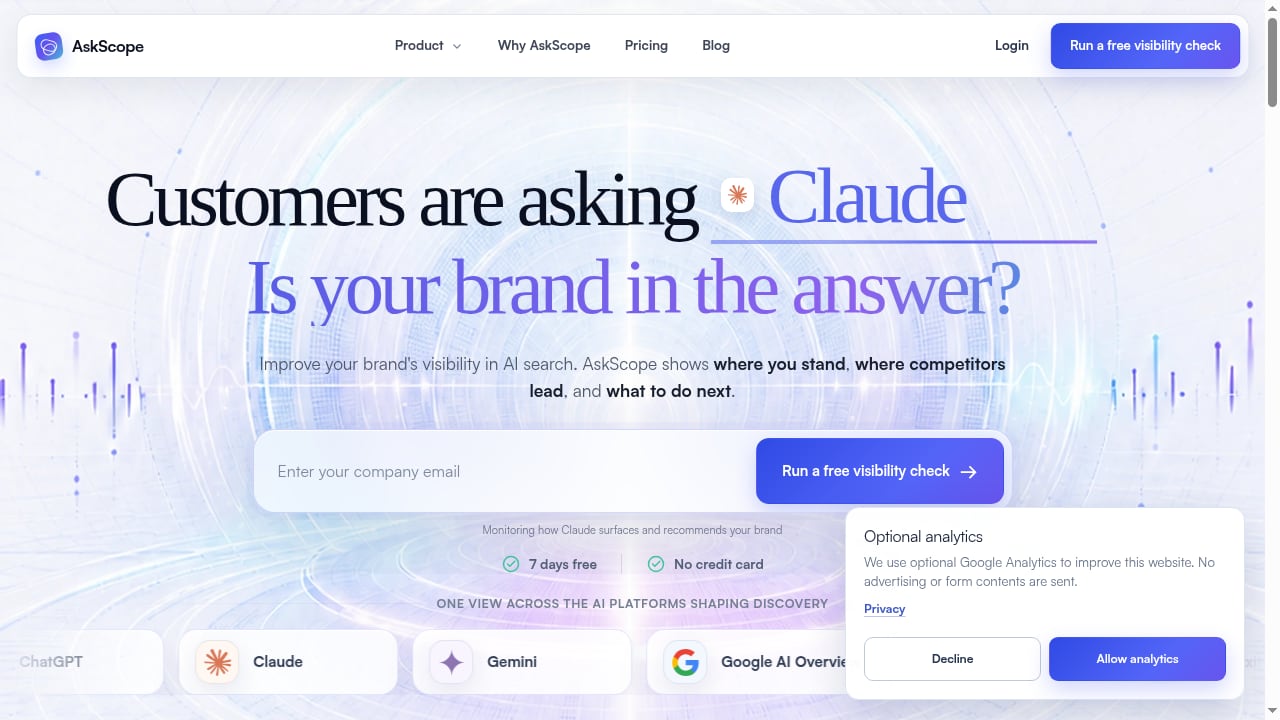
First viewport screenshot of Customers are asking AI. Is your brand in the answer?.
Standard Google Search Console reporting measures clicks. It doesn't tell you whether an AI Overview appeared, whether your brand was cited, or how your citation share compares to competitors on the same queries.
That gap matters because zero-click visibility is now a governed brand channel. If your brand appears incorrectly in an AI answer — outdated pricing, a competitor's framing of your category, stale product descriptions — you have no mechanism to detect or correct it without active monitoring.
This is where a dedicated AI visibility monitoring platform like AskScope becomes practical for lean teams. AskScope tracks how your brand appears in AI-generated responses, including ChatGPT, and connects every metric to evidence: which prompts mention you, where you rank in the answer, which competitors are recommended instead, and which sources shape the response. That evidence is what turns a vague "we should do something about AI search" concern into prioritized work.
How to Build a Zero-Click Search Strategy
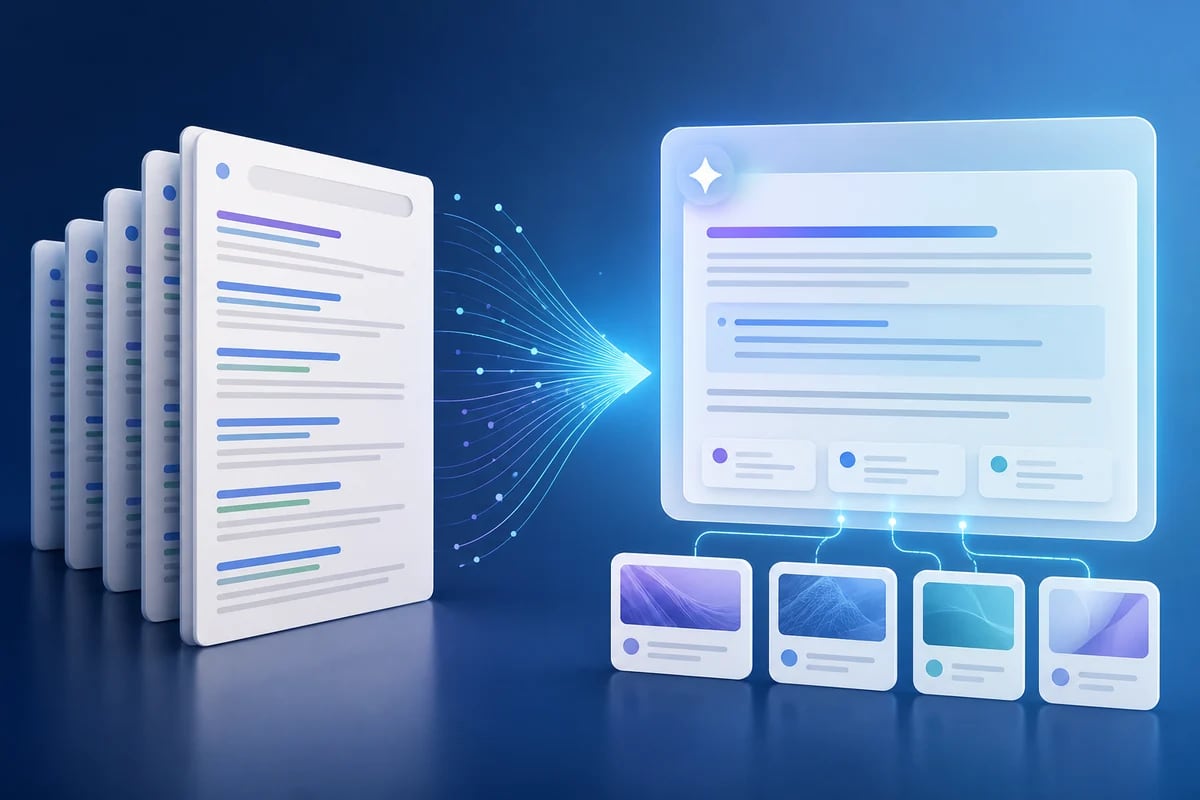
GEO vs. SEO: what changes when the answer replaces the result page editorial illustration.
1. Establish an AI Visibility Baseline
You can't improve what you don't measure. Start by capturing how your brand currently appears across the prompts that matter to your category. This means tracking:
- Mention rate: How often your brand appears in AI answers for target prompts.
- Position: Where you appear relative to competitors in the answer.
- Sentiment and accuracy: Whether the characterization is correct and favorable.
- Citation sources: Which pages and domains the AI system draws from.
A free visibility check with daily monitoring across a focused set of prompts is enough to establish a baseline for most lean teams. AskScope offers a free visibility check with seven days of daily ChatGPT monitoring across 40 prompts — a practical starting point before committing to a broader program.
2. Optimize Content for Extraction, Not Just Ranking
The content attributes that earn a featured snippet are the same ones that determine eligibility for an AI Overview citation. Research on featured snippets in the AI Overview era confirms a strong correlation between pages previously selected as featured snippets and pages cited as AI Overview sources. Voice assistants follow the same logic: roughly 41% of voice search results come directly from featured snippets.
Optimize for one surface, and you're effectively optimizing for all three. In practice, that means:
- Question-phrased headings that mirror how people actually ask.
- Direct 40-to-60-word answers immediately below those headings.
- Semantic HTML and logical heading hierarchy so extraction systems can parse your content.
- FAQ schema where it genuinely fits.
- Descriptive alt text that reinforces meaning for accessibility tools and extraction systems alike.
Accessibility isn't an enhancement on top of discoverability. It's what makes content readable to the systems that power snippets, voice search, and AI answers.
3. Build Entity Authority
AI systems need to characterize your brand accurately. That requires consistent signals across structured data, third-party mentions, and knowledge graph entries. A page with strong content but broken schema won't get extracted. A page with perfect structure but weak entity signals won't get cited.
Entity authority work includes:
- Consistent brand naming, descriptions, and category framing across your owned properties.
- Structured data that reflects your actual offerings and organization.
- Third-party mentions that reinforce the same positioning.
4. Close Citation Gaps
Citation analysis reveals which sources shape AI answers in your category. If competitors are cited more often, the question is why: Do they have clearer definitions? Better-structured comparisons? More authoritative third-party coverage?
AskScope's citation analysis traces the sources shaping AI answers, and its recommendations and tasks turn that evidence into a prioritized work queue. For lean teams, this is the difference between guessing at content ideas and knowing which gaps to close first.
5. Track Zero-Click KPIs
Traffic alone won't tell you whether your zero-click strategy is working. Track signals that reflect influence without a click:
| Signal | What to measure |
|---|---|
| Branded search volume | A proxy for zero-click brand impression impact. If people search your brand after seeing an AI answer, it shows up here. |
| Citation accuracy | Whether your brand is characterized correctly across snippets, knowledge panels, and AI responses. |
| Conversion rate of click-through traffic | Users who click after a zero-click encounter are higher intent; their conversion rate should reflect that. |
| Share of answer engine voice | What percentage of AI citations in your category come from your content versus competitors. |
6. Govern the Answers You Don't Host
Someone needs to own AI answer monitoring. Someone needs to own featured snippet accuracy. Someone needs to own knowledge panel corrections. In a zero-click environment, these aren't separate workstreams — they're one visibility stack.
Governance means:
- Assigning ownership for each zero-click surface.
- Setting a monitoring cadence (weekly or monthly, depending on category volatility).
- Defining escalation paths when brand information appears incorrectly.
- Connecting content, technical, analytics, and brand teams around a single source of truth.
Siloed teams optimizing in isolation is exactly the scenario zero-click search exposes and punishes.
Zero-Click vs. Traditional SEO: What Changes, What Stays
The foundations haven't changed: authoritative content, clean technical architecture, and structured data remain prerequisites. What's changed is that these elements must work together rather than in parallel.
| Dimension | Traditional SEO | Zero-Click Search Strategy |
|---|---|---|
| Primary metric | Clicks, sessions, rankings | Citation share, mention rate, branded search |
| Content goal | Rank and convert | Be extractable and accurately represent the brand |
| Success signal | Traffic growth | Influence before the click |
| Ownership | SEO team | Cross-functional visibility stack |
| Monitoring | Search Console, rank trackers | AI visibility and citation monitoring |
Practical Example: A Lean Team's First 30 Days
A small B2B software team wants to know why competitors keep appearing in ChatGPT answers for their category. Here's a realistic first month:
- Week 1: Run a baseline visibility check across 40 prompts. Record mention rate, position, and competitor presence.
- Week 2: Analyze citations. Identify which sources AI systems draw from and where the team's content is absent.
- Week 3: Rewrite two high-priority pages with question-based headings and direct answers. Add FAQ schema where it fits.
- Week 4: Retest the same prompts. Compare before and after. Prioritize the next content gap based on evidence, not opinion.
This loop — monitor, analyze, act, retest — is the core of a sustainable zero-click strategy. AskScope supports this workflow end to end, from visibility monitoring through content creation and distribution, with a methodology that connects every metric to evidence.
Sources and further reading
- Zero Click Marketing: The Strategy For When Clicks Stop Working - The internet changed. The playbook didn’t — until now.
- The zero-click shift: What happens when your audience gets the answer without visiting your site - As AI-generated answers resolve 65 percent more searches without a click, brand visibility is replacing traffic as the primary search metric. Here's what the zero-click shift means for enterprise marketing strategy.
- The Click Is No Longer The Strategy: How Brands Win In A Zero ... - Jul 8, 2026 ... The behavioral evidence is important. Pew Research Center analyzed U.S. Google users in March 2025 and found that when an AI summary appeared, ...
Frequently Asked Questions
What is a zero-click search strategy?
It's a plan to optimize for impact that happens without a website visit — comprehension, trust, recall, and preference — by creating standalone value where your audience already is, including AI answers, featured snippets, and social platforms.
Does zero-click mean I should stop caring about clicks?
No. The click still matters, but it's increasingly the result of influence rather than the signal that influence happened. Users who click after a zero-click encounter tend to be higher intent.
How do I measure zero-click visibility?
Track branded search volume, citation accuracy, share of answer engine voice, and conversion rate of click-through traffic. AI visibility monitoring platforms can track mention rate, position, and citation sources across AI answers.
Is zero-click optimization the same as GEO?
They overlap heavily. Generative Engine Optimization (GEO) focuses on improving brand visibility in AI-generated answers. A zero-click search strategy is the broader plan that includes GEO alongside featured snippet, voice, and knowledge panel optimization.
How often should I monitor AI answers?
Cadence depends on category volatility. Most teams benefit from weekly monitoring of core prompts and monthly reviews of broader citation share. Daily monitoring is useful during launches or reputation-sensitive periods.
Conclusion
The zero-click shift isn't a future scenario — it's the current state of search. Roughly two-thirds of Google searches end without a click, and AI Overviews push that figure higher. The brands that win in this environment treat zero-click surfaces as governed brand channels, measure citation share alongside traffic, and optimize content for extraction across snippets, voice, and AI answers.
Start with a baseline. Understand where you appear, where competitors appear instead, and which sources shape the answers. Then close the gaps with structured, extractable content and a monitoring cadence that catches errors before your audience does. The click may be disappearing, but the opportunity to influence has never been larger.
For a practical starting point, run a free AI visibility check with AskScope and see how your brand currently appears in ChatGPT answers across the prompts that matter to your category.